Global passport ranking 2026 | Vini Grow Holidays
Global Passport Ranking 2026: Strongest Passports & Visa-Free Countries
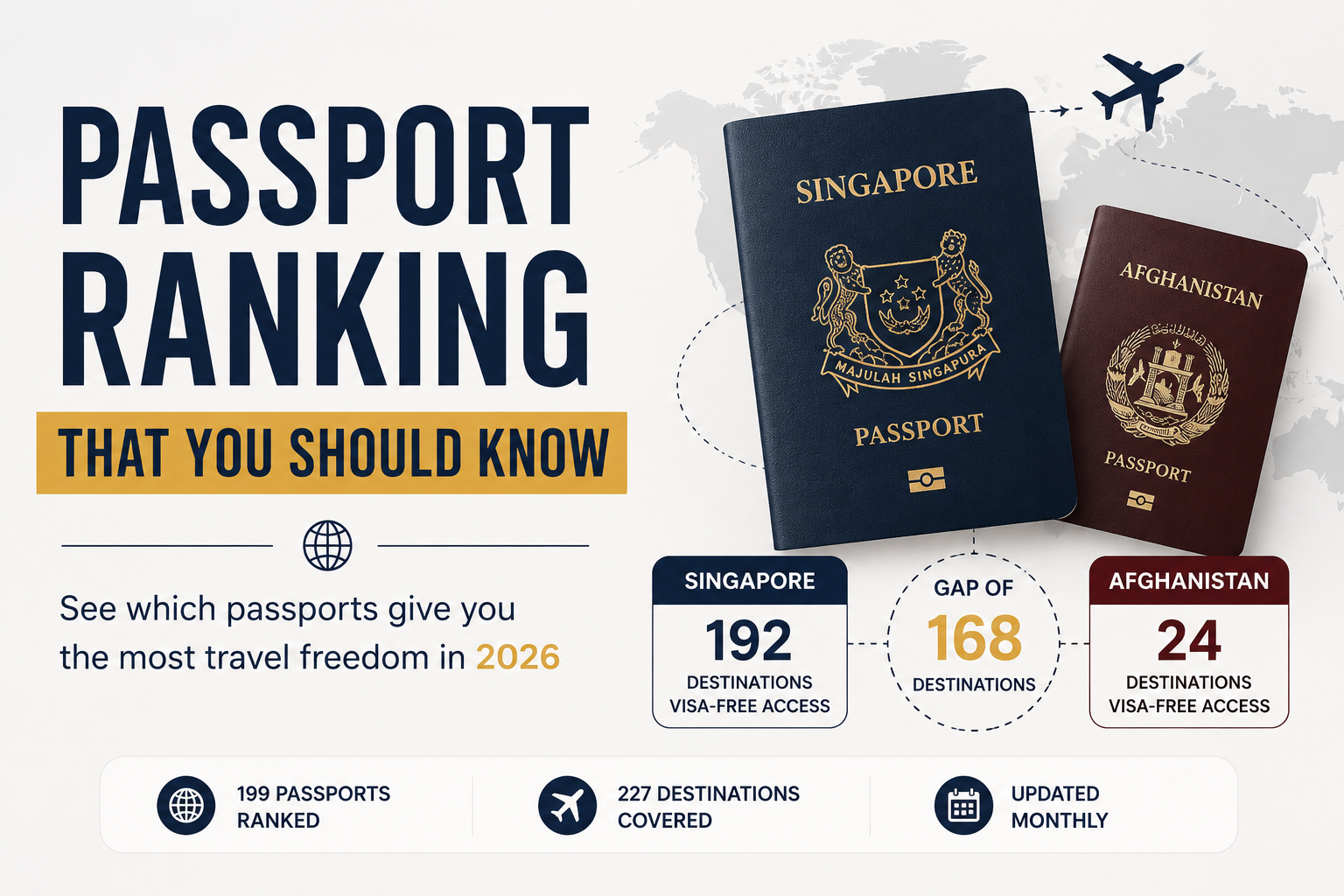
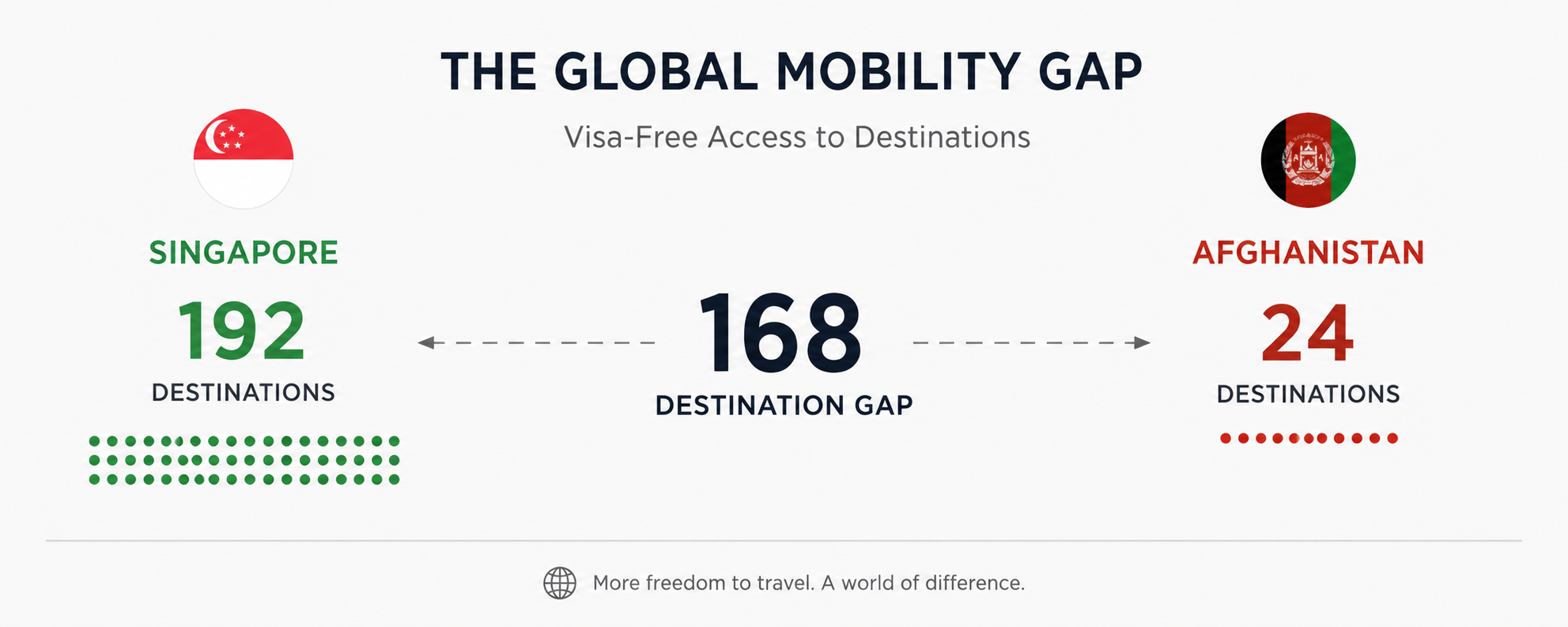
Picture two travellers packing for a spontaneous long weekend abroad. One holds a Singapore passport and can walk into 192 countries without applying for a single visa. The other holds an Afghan passport and has just 24 destinations open to them without prior approval. That 168-country gap is the widest ever recorded - and it's the story at the heart of the global passport ranking 2026.
Whether you're an Indian traveller mapping out your next holiday, a frequent flyer curious about where your passport stands, or someone simply fascinated by how travel freedom is shifting, this guide breaks down everything worth knowing: the world passport ranking, how it's actually calculated, which countries offer the most visa-free access, and - most importantly for our readers - exactly where the Indian passport stands in 2026 and what that means for your travel plans.
Global Passport Ranking 2026
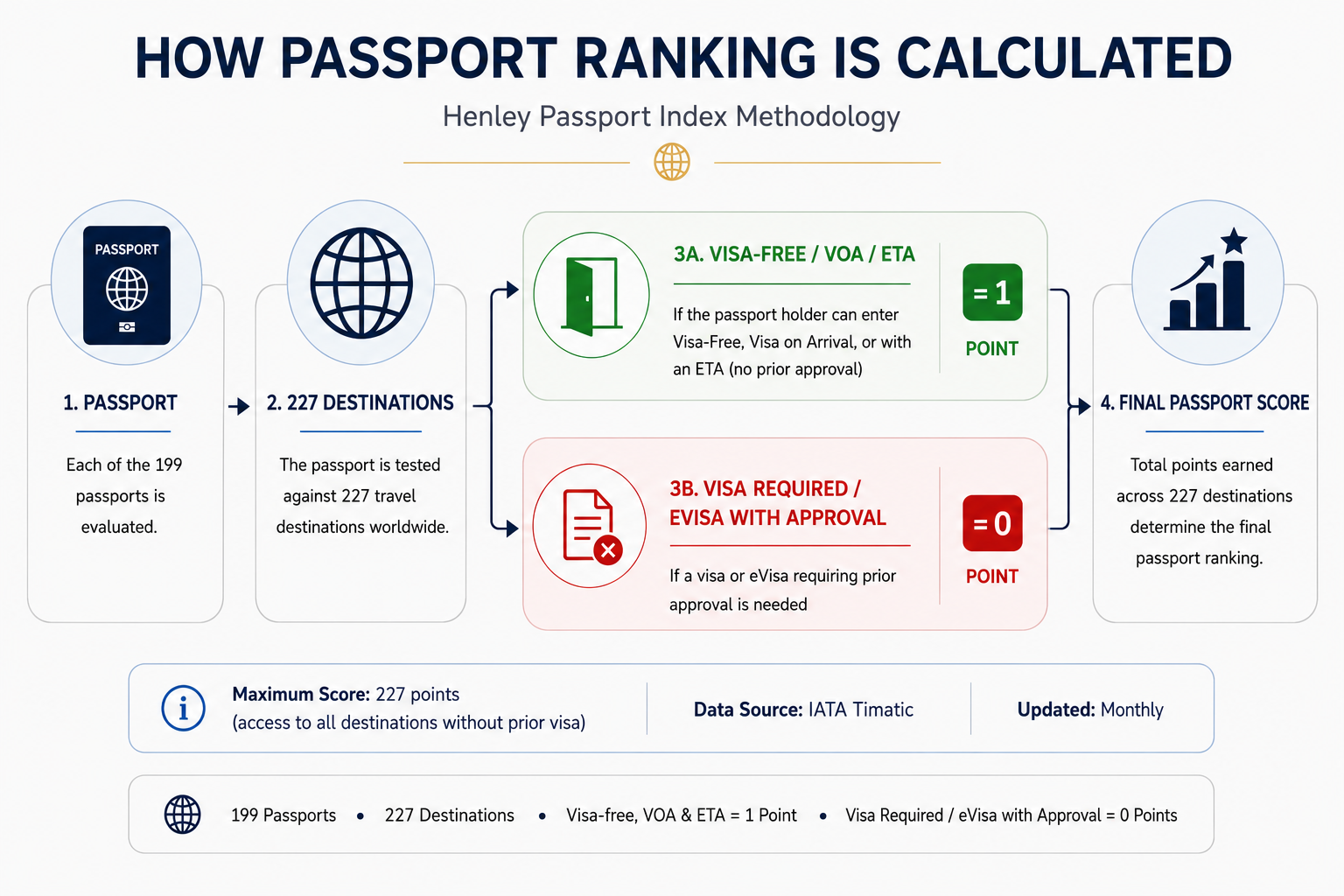
The most widely cited passport ranking by country comes from the Henley Passport Index, now in its 20th year. It scores 199 passports against 227 travel destinations using exclusive data from the International Air Transport Association (IATA), and it's updated every quarter as visa policies shift around the world.
Here's the headline number that puts everything in perspective: back in 2006, the average passport granted visa-free access to just 58 destinations. In 2026, that average has nearly doubled to 108. Global mobility, on the whole, has genuinely improved.
But the "average" hides a widening divide. A record number of passports are now clustered at the very top of the global passport ranking 2026, all offering access to 180+ countries. Meanwhile, passports at the bottom of the table remain more isolated than ever. The result is a mobility gap between the top and bottom ranked passports that has grown from 118 destinations in 2006 to 168 destinations today -the largest gap the index has ever measured.
A few movements are worth flagging if you're tracking the world passport ranking closely:
- The United Arab Emirates has been the index's biggest long-term climber, rising an extraordinary 57 places over 20 years to break into the world's top tier - the first Arab-majority nation to do so.
- Albania, Ukraine, Serbia, and North Macedonia have all posted major gains across the Western Balkans and Eastern Europe in the past two decades.
- The United States has recorded one of the steepest declines of any passport since 2006, slipping several places and - for the first time in the index's 20-year history - dropping out of the global top 10 in 2026.
- China has climbed 28 places over the last decade, now sitting alongside Kosovo in the mid-table with access to roughly 81–141 destinations depending on the exact quarterly update.
If you only remember one thing about the 2026 edition, make it this: passport power today is less about legacy and more about active diplomacy. Countries that keep signing visa-waiver agreements keep climbing - regardless of how "powerful" they were a decade ago.
Top 10 Most Powerful Passports in the World
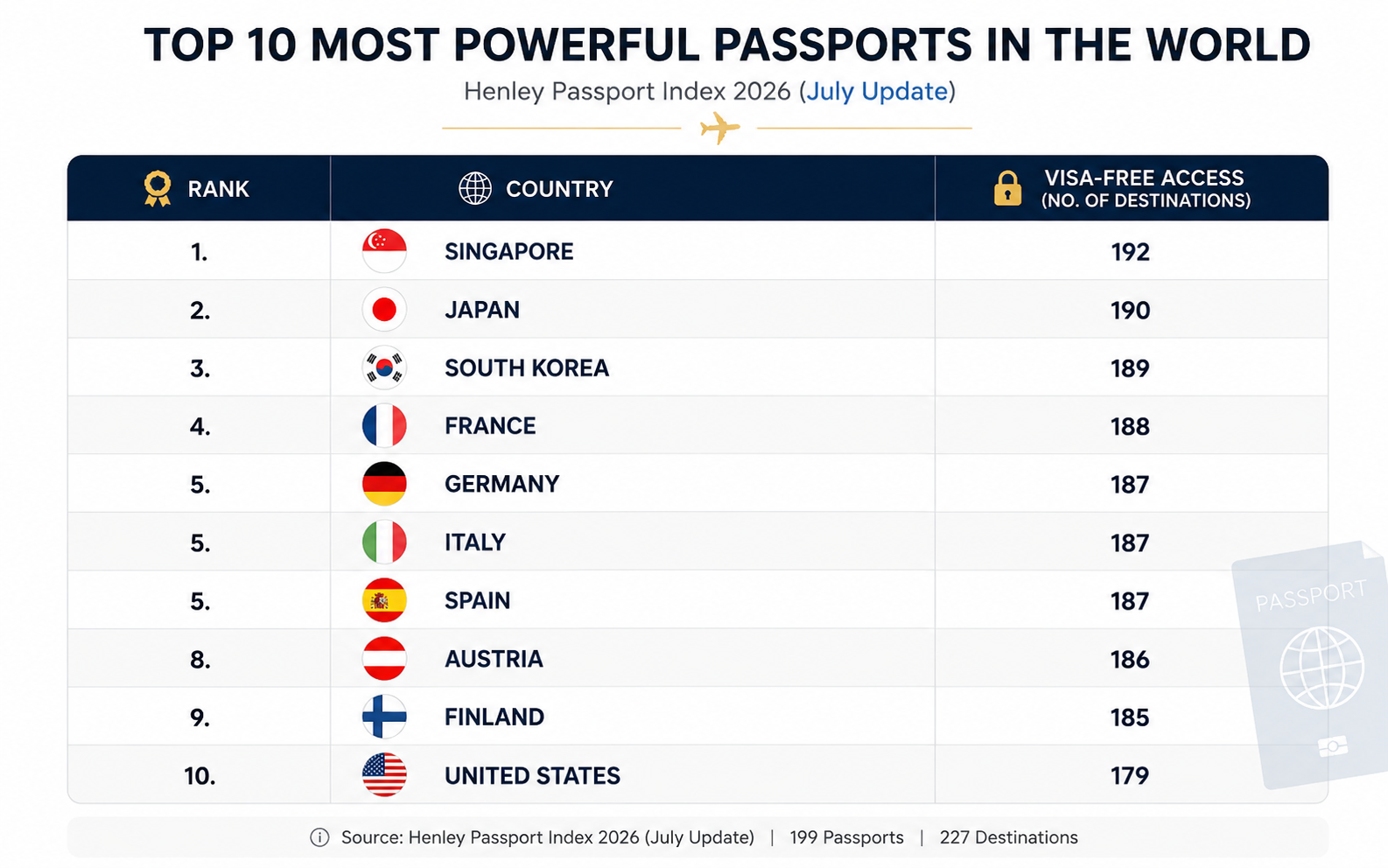
So which are the strongest passports in the world right now? Based on the January 2026 Henley Passport Index update, here's the definitive top 10:
A few things make this list genuinely interesting beyond the numbers:
Singapore's three-peat. For the third year running, Singapore holds the title of the world's strongest passport. A Singaporean citizen can access roughly 85% of the destinations tracked by the index without arranging a visa in advance - the most frictionless travel document on the planet.
Asia dominates the very top. Singapore, Japan, and South Korea occupy two of the top three positions, a reminder that passport strength today isn't a purely Western story anymore.
The UAE's arrival is historic. Joint fifth place might not sound dramatic, but it makes the UAE the first Arab nation ever to break into Henley's global top tier - the product of a deliberate two-decade strategy of aviation connectivity and bilateral agreements, not luck.
The US fell out of the top 10 for the first time ever. This is arguably the single biggest talking point of the 2026 rankings. Some editions of the index even show the US briefly slipping to 10th with just 179 destinations - a sharp contrast to 2014, when the US and UK jointly held the number one spot. It's a genuinely fun (if slightly sobering, depending on where you're reading from) data point for anyone comparing the most powerful passports in the world over time.
On the flip side, the 10 weakest passports in the world in 2026 remain concentrated in conflict-affected regions: Afghanistan sits last with access to just 24 destinations, followed closely by Syria (26), Iraq (29), and Pakistan and Yemen in the low 30s. For citizens of these countries, even short-haul travel typically requires extensive paperwork, high refusal rates, and long processing times - a stark illustration of how uneven global mobility has become.
How Is Passport Ranking Calculated?
If you've ever wondered how a passport index actually works, the methodology is simpler than it looks - but there's an important nuance most people miss.
Henley & Partners' passport strength score only counts destinations you can enter without securing a visa before you travel. That includes:
- Genuine visa-free entry
- Visa-on-arrival
- Electronic Travel Authorisations (eTAs) that don't require prior government approval
- Basic visitor permits issued at the border
It does not count destinations that require a traditional advance visa or even a full e-visa application submitted and approved before departure - those score zero, no matter how easy the process actually is in practice. That's why a country can technically be "visa-friendly" for tourists in everyday terms and still score low on the index.
This is also why how passport ranking works produces some counter-intuitive results. Switzerland, for example, actually held a high score of 185 destinations at one point in 2026 - yet appeared in fifth place after another wave of countries added a destination each and moved past it. A passport can gain access to more places and still fall in the relative ranking, simply because everyone else is improving faster.
It's also worth knowing there's more than one index in circulation. Henley's is the oldest and most cited, updated quarterly using IATA's Timatic data. Arton Capital runs a rival Global Passport Power Rank, updated in near real-time by monitoring individual government portals directly - and its methodology has, in some editions, ranked the UAE first instead of Singapore. Same passports, genuinely different lenses. If you see two "number one passports in the world" quoted in different articles, this is usually why.
Countries With the Most Visa-Free Access
The phrase "visa-free countries" gets used loosely, so let's be precise about what it actually buys you as a traveller.
At the top end, Singapore's 192-destination score means holders can show up at the airport for roughly 85% of the world's countries with nothing but their passport and a return ticket. Japan, South Korea, and the tightly bunched European cluster aren't far behind, offering 180–188 destinations of near-total spontaneity - the kind of visa-free access that turns a "let's go this weekend" idea into an actual trip rather than a six-week visa application.
That freedom compounds in practical ways most people don't think about until they've lived without it:
- Fewer forms, fewer embassy appointments, and far less waiting around for approval letters
- The ability to book flights on short notice for work or leisure
- Lower total trip cost, since visa fees and agent charges simply don't apply
- Genuinely spontaneous travel - something increasingly rare as the mobility gap widens
On the other end of the spectrum, the passport visa-free ranking tells a much harder story. Afghanistan, Syria, Iraq, Pakistan, and Yemen sit at the bottom, each offering their citizens fewer than 35 visa-free destinations. For travellers from these countries, nearly every international trip - even to a neighbouring country - requires advance paperwork, documentation of finances, and often a waiting period measured in weeks or months.
The takeaway for anyone comparing number of visa-free countries by passport: the gap isn't just a ranking curiosity. It's the difference between "I'll decide next week" and "I need to start this process today."
Indian Passport Ranking 2026
Now to the section our readers care about most: where does India actually stand in the India passport ranking 2026?
The honest answer is - it's been a rollercoaster of a year. Here's how India's position has moved through 2026 alone:
As of the latest available update, India sits at 81st globally with visa-free or visa-on-arrival access to 55 destinations. Zoom out further and the bigger picture is more encouraging: when the Henley Index first launched in 2006, India ranked 71st. The Indian passport strength score dipped to its weakest point - 90th - in 2021, before climbing back to 80th in 2024. In other words, the 2026 figure isn't a straight decline; it's part of a genuinely volatile two-decade pattern shaped by bilateral agreements, changing diplomatic ties, and shifts in how other countries' scores move relative to India's.
For context on where India sits regionally: China has climbed 28 places over the past decade and now sits around the 59th position with roughly 141 visa-free destinations, putting it well ahead of India on this particular metric - a genuinely interesting comparison for anyone tracking Asia's shifting travel-freedom map.
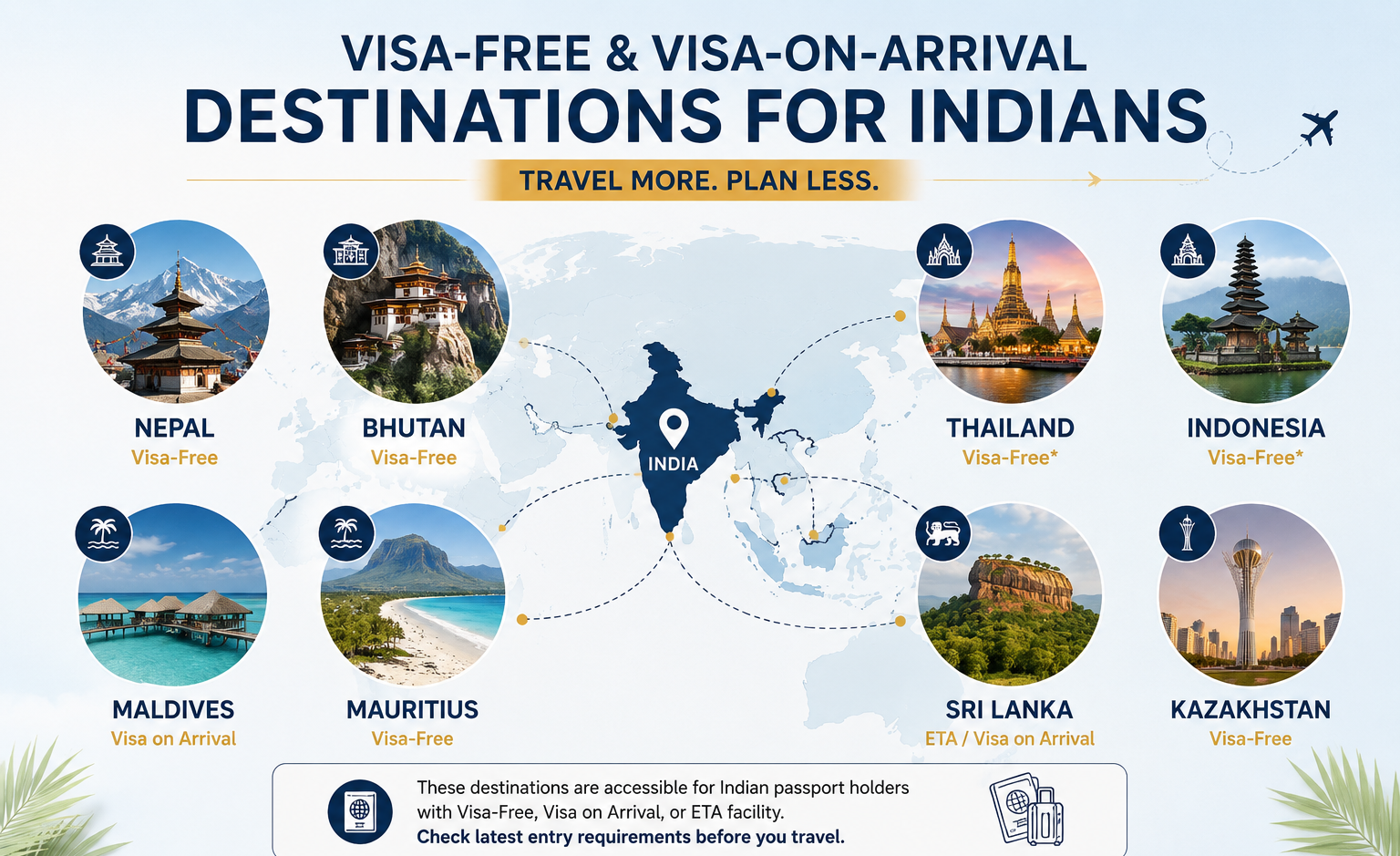
So what are the actual Indian passport visa-free countries? Some of the most useful ones for holiday planning include:
- Asia: Nepal, Bhutan, Thailand, Indonesia, Malaysia, Sri Lanka, Kazakhstan
- Islands & beach destinations: Maldives, Mauritius, Fiji, Jamaica
- Middle East: Qatar (visa-on-arrival/eTA depending on category), Iran
- Several destinations across Africa and the Caribbean also fall into this visa-free-or-VOA bracket
This is exactly the kind of list that turns "where can I go without visa stress" into a genuinely short trip-planning conversation.
What Does Passport Ranking Mean for Indian Travellers?
Here's the practical translation of all that data: your passport rank isn't just a statistic - it directly shapes how far in advance you need to plan, how much your trip will cost, and how spontaneous you can actually be.
For countries Indians can visit without a visa, planning is refreshingly simple. A beach weekend in the Maldives or a quick trip to Mauritius can genuinely be booked on short notice, since there's no embassy appointment standing between you and your flight.
For everything else - the US, UK, Canada, Australia, and most of the Schengen area - visa-free travel for Indians simply doesn't apply yet, and advance visa applications remain non-negotiable. These are also, unsurprisingly, some of the most in-demand and most document-heavy applications, which is exactly where a little expert help changes the outcome.
A few honest takeaways worth building into your travel calendar:
- If your destination is on India's visa-free or VOA list, you still don't need to skip the planning - flight prices and peak-season hotel rates move fast even without visa deadlines forcing your hand.
- If your destination requires an advance visa, start the process 6–8 weeks out at minimum, longer during peak seasons (summer Schengen slots and US interview wait times are notorious for this).
- E-visas are quietly becoming the middle ground for many destinations, offering more convenience than a traditional visa while still requiring pre-approval - worth checking before you assume a country needs a "full" visa.
This is precisely the gap Vini grow Holidays exists to close - tracking which destinations are genuinely visa-free for Indian passport holders right now, flagging the ones where policies have recently changed, and handling the advance-visa paperwork for the destinations that still need it, so your travel plans aren't held hostage by a form.