Festivals and Famous Attractions in Switzerland
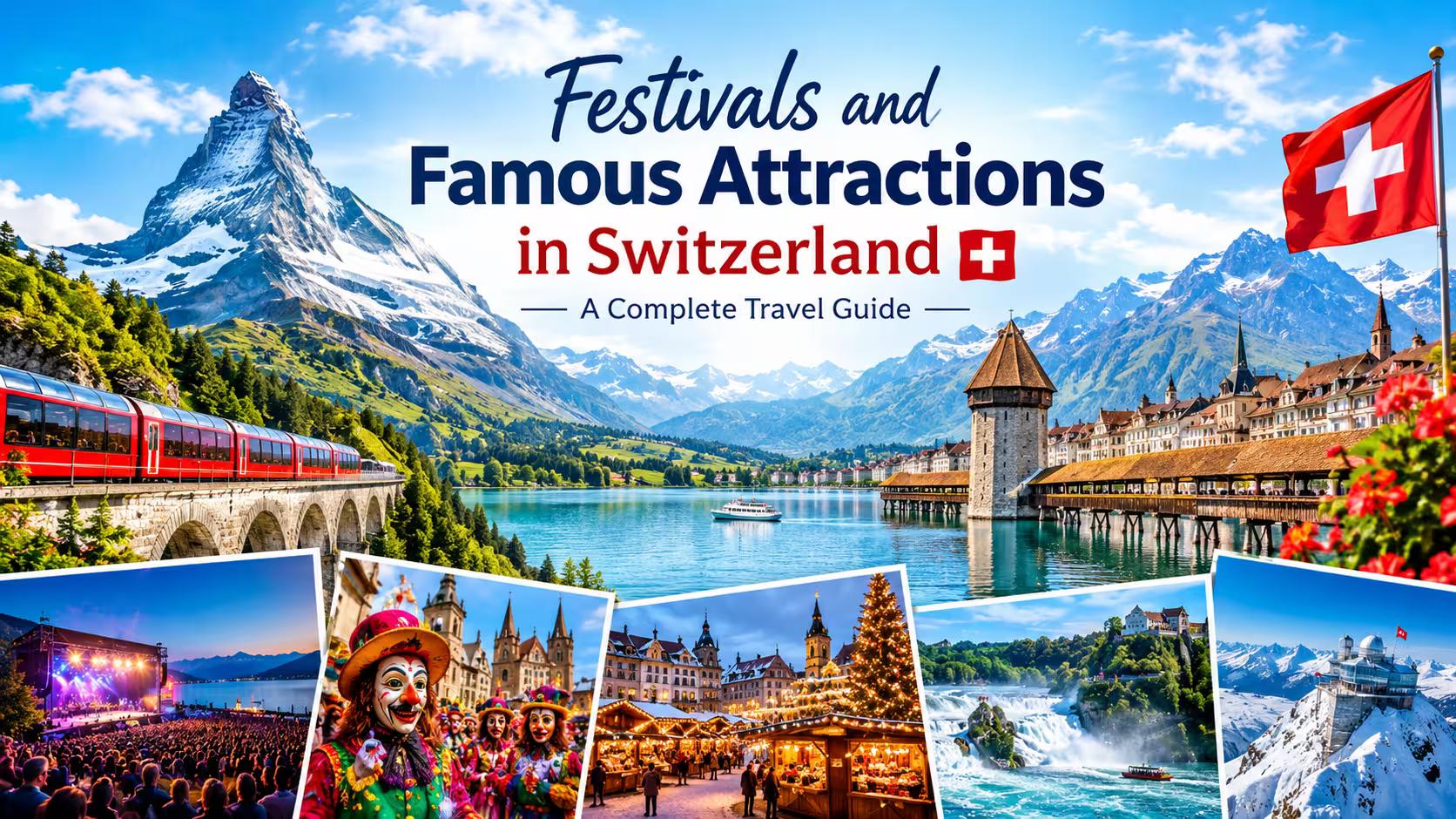
Switzerland is one of the most beautiful travel destinations in the world, famous for its snow-covered mountains, crystal-clear lakes, charming villages, scenic train journeys, and vibrant cultural festivals. Whether you want to explore the Swiss Alps, attend an international music festival, enjoy traditional Swiss food, or discover historic towns, Switzerland offers unforgettable experiences for every traveller.
From the iconic Matterhorn and spectacular Rhine Falls to the world-famous Montreux Jazz Festival and colourful Basel Carnival, there are countless reasons to add Switzerland to your travel bucket list.
In this guide, we will explore the most famous festivals and attractions in Switzerland, the best time to visit, popular things to do, and essential travel tips to help you plan your trip.
Why Is Switzerland Famous?
Switzerland is known for its natural beauty, rich culture, and excellent travel experiences. Here are five things that make the country special:
- The Swiss Alps: Spectacular mountain ranges, snow-covered peaks, and scenic hiking trails.
- Beautiful lakes: Lake Geneva, Lake Lucerne, and Lake Zurich offer stunning views and relaxing experiences.
- Chocolate and cheese: Switzerland is famous for Swiss chocolate, cheese fondue, and raclette.
- Scenic train journeys: Routes such as the Glacier Express and Bernina Express offer breathtaking views of the countryside.
- Festivals and traditions: Music festivals, cultural celebrations, and traditional Alpine events attract visitors throughout the year.
Famous Festivals in Switzerland
Switzerland hosts numerous festivals throughout the year, celebrating music, art, culture, food, and local traditions. The following are some of the most popular festivals to experience during your visit.
1. Montreux Jazz Festival
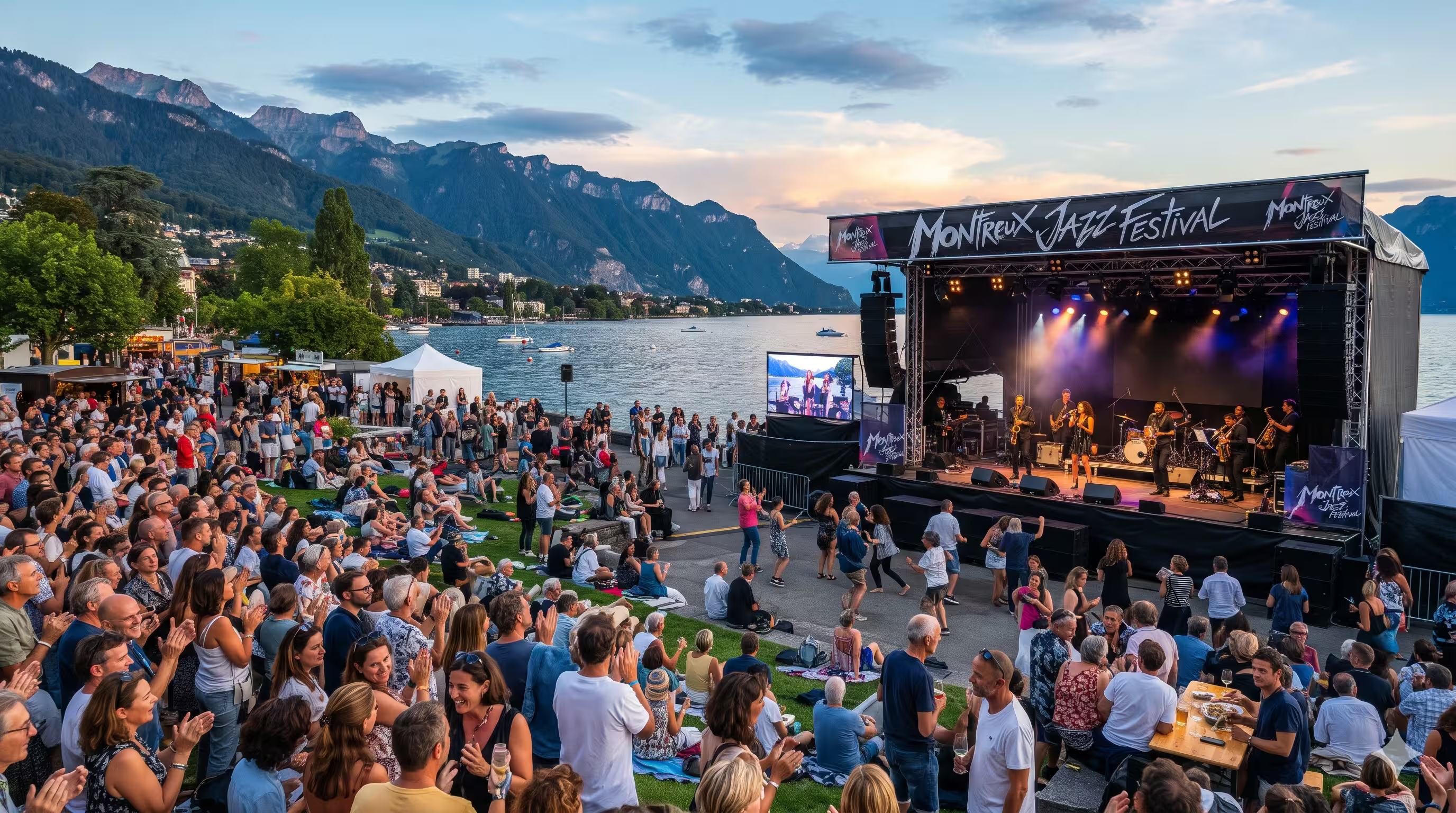
The Montreux Jazz Festival is one of Switzerland's most internationally recognised music festivals. It takes place in Montreux, on the shores of Lake Geneva, and attracts music lovers from around the world.
Despite its name, the festival features a wide range of musical genres, including jazz, rock, pop, soul, and electronic music. Visitors can enjoy performances by international artists while experiencing the beautiful lakeside atmosphere.
Why visit?
- Enjoy live performances by international musicians.
- Explore the scenic Lake Geneva waterfront.
- Experience Switzerland's lively music culture.
- Discover restaurants, cafés, and attractions around Montreux.
Best for: Music lovers, couples, and travellers interested in cultural events.
2. Basel Carnival (Basler Fasnacht)
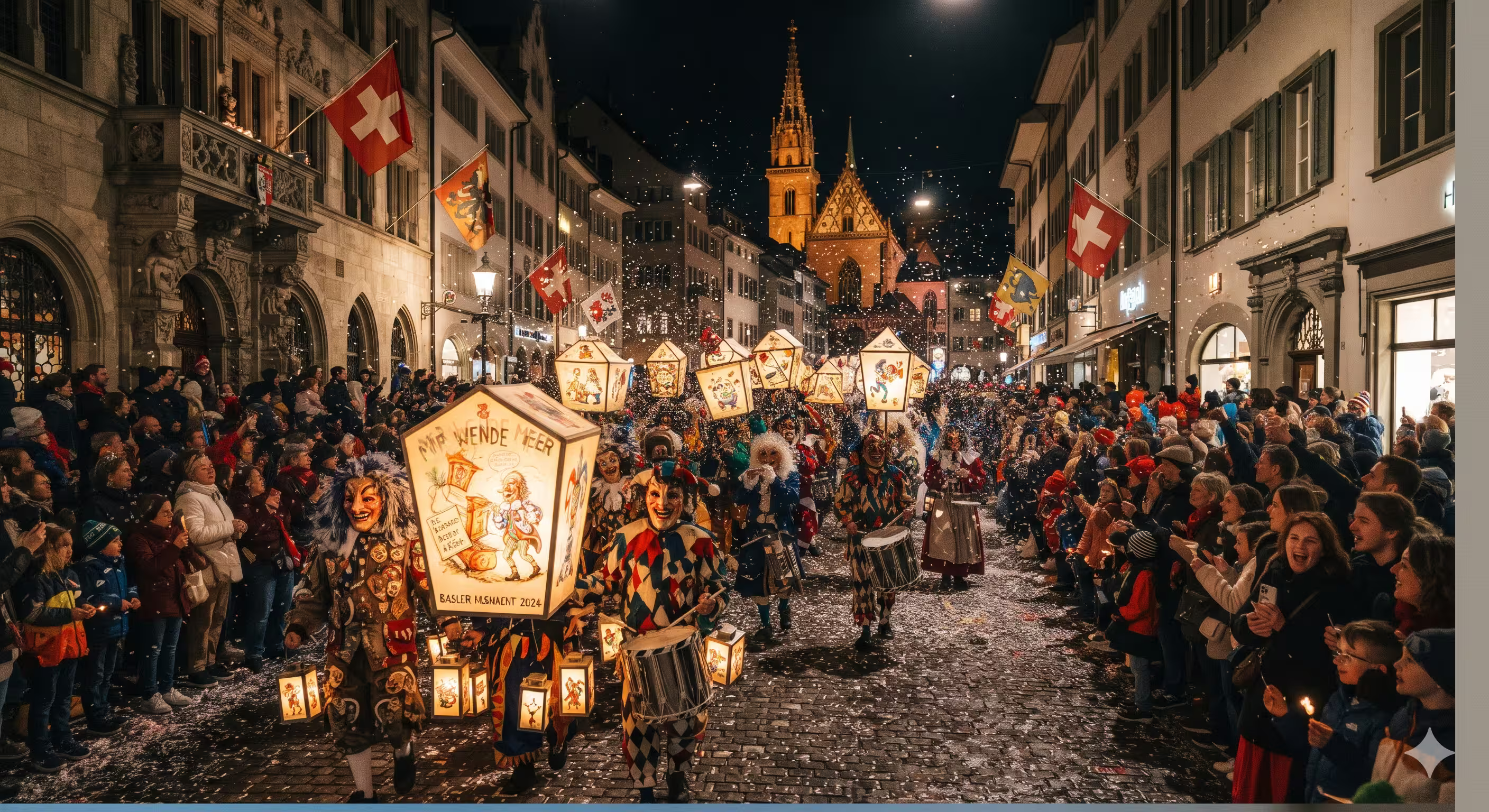
Basel Carnival is one of Switzerland's most famous traditional celebrations. Known locally as Basler Fasnacht, it transforms the city of Basel into a colourful celebration filled with costumes, lanterns, music, and parades.
The festival traditionally begins early on the Monday after Ash Wednesday. Participants march through the streets with elaborate lanterns and play traditional instruments, creating a unique cultural experience.
Why visit?
- Watch colourful parades and creative lantern displays.
- Experience traditional Swiss music and costumes.
- Explore Basel's historic streets during the celebrations.
- Discover local food and cultural traditions.
Best for: Culture enthusiasts, photographers, and travellers interested in traditional festivals.
3. Swiss National Day
Swiss National Day is celebrated on 1 August every year. It marks the country's national identity and brings communities together through public celebrations, speeches, music, bonfires, and fireworks where organised.
Visitors can experience celebrations in cities, towns, and mountain villages. Many places organise local events that showcase Swiss traditions, food, and community life.
Why visit?
- Experience Switzerland's national celebrations.
- Enjoy traditional food and local entertainment.
- Watch fireworks or bonfires at participating locations.
- Explore villages decorated for the occasion.
Best for: Families, first-time visitors, and travellers interested in Swiss culture.
4. Locarno Film Festival
The Locarno Film Festival is a major international film event held in Locarno, in the Italian-speaking canton of Ticino. It is known for its diverse film programme and outdoor screenings, including screenings in the beautiful Piazza Grande.
The festival attracts filmmakers, actors, cinema enthusiasts, and visitors who want to experience Switzerland's creative side.
Why visit?
- Watch international films and independent cinema.
- Experience open-air screenings in a historic square.
- Explore Locarno's charming streets and lakeside surroundings.
- Discover the cultural atmosphere of southern Switzerland.
Best for: Film lovers, art enthusiasts, and creative travellers.
5. Lucerne Festival
Lucerne Festival is a renowned classical music festival held in the picturesque city of Lucerne. It attracts orchestras, conductors, soloists, and classical music enthusiasts from across the world.
The city's lakeside setting and surrounding mountains make the festival especially appealing to travellers who want to combine music with sightseeing.
Why visit?
- Attend performances by renowned classical musicians.
- Explore Lucerne's historic old town.
- Visit Lake Lucerne and the famous Chapel Bridge.
- Combine cultural activities with mountain excursions.
Best for: Classical music lovers, couples, and cultural travellers.
6. Zurich Street Parade
Zurich Street Parade is a large electronic music event featuring DJs, dance music, colourful costumes, and lively crowds. The event takes place around Lake Zurich and attracts electronic music fans from different countries.
The parade creates a vibrant atmosphere throughout the city, with music and dance forming the centre of the celebration.
Why visit?
- Enjoy electronic music and DJ performances.
- Experience Zurich's energetic nightlife.
- Explore the city and its lakeside attractions.
- Participate in a large-scale music celebration.
Best for: Young adults, electronic music fans, and nightlife enthusiasts.
7. Neuchâtel Grape Harvest Festival
The Neuchâtel Grape Harvest Festival celebrates the region's grape-growing traditions and the arrival of the harvest season. It features parades, music, decorations, food stalls, and regional specialities.
It is an excellent opportunity to explore a lesser-known part of Switzerland while experiencing local culture.
Why visit?
- Discover regional food and traditions.
- Watch festive parades and performances.
- Explore Neuchâtel's old town and lakeside scenery.
- Experience a traditional harvest celebration.
Best for: Food lovers, cultural travellers, and visitors exploring western Switzerland.
8. Alpine Cattle Descent
Traditional Alpine cattle descents, often known by regional names such as Alpabzug, take place in various Swiss regions towards the end of the summer grazing season.
Farmers bring decorated cattle down from mountain pastures to villages. The celebrations may include traditional clothing, music, local food, and craft markets.
Why visit?
- Experience authentic rural Swiss traditions.
- See cattle decorated with flowers and bells.
- Discover Alpine villages and local specialities.
- Learn about traditional mountain farming.
Best for: Families, photographers, nature lovers, and cultural travellers.
9. Swiss Christmas Markets
During the winter season, Swiss towns and cities host Christmas markets featuring festive decorations, handmade gifts, seasonal food, and warm drinks.
Popular destinations for Christmas markets include Zurich, Basel, Montreux, and Lucerne. Each location offers a different atmosphere, from historic town squares to lakeside settings.
Why visit?
- Shop for handmade gifts and local products.
- Try seasonal treats and Swiss specialities.
- Enjoy festive lights and decorated streets.
- Experience Switzerland's winter atmosphere.
Best for: Families, couples, and travellers visiting Switzerland in winter.
Famous Attractions in Switzerland
Switzerland is home to some of Europe's most spectacular natural landscapes and historic landmarks. Here are the top attractions to include in your travel itinerary.
1. Matterhorn and Zermatt
The Matterhorn is one of the most recognisable mountains in the world. Its distinctive pyramid-shaped peak makes it a symbol of Switzerland and a favourite subject for photographers.
The nearby village of Zermatt offers beautiful mountain views, walking trails, restaurants, and access to mountain excursions. The region is popular with hikers in summer and skiers in winter.
Top things to do:
- Photograph the Matterhorn from scenic viewpoints.
- Explore Zermatt's village streets.
- Take a mountain excursion for panoramic views.
- Enjoy hiking, skiing, or snow activities depending on the season.
Best time to visit: Summer for hiking and outdoor exploration; winter for skiing and snow experiences.
2. Jungfraujoch – Top of Europe
Jungfraujoch is one of Switzerland's best-known mountain excursions. Located high in the Bernese Alps, it offers impressive views of glaciers and surrounding mountain peaks.
Visitors can travel by mountain railway to experience the high-altitude landscape and explore designated visitor attractions.
Top things to do:
- Enjoy panoramic Alpine views.
- Visit the Ice Palace when open.
- Experience the mountain railway journey.
- Take photographs of the surrounding glaciers and peaks.
Travel tip: Mountain weather can change quickly, and high altitude may affect some visitors. Check weather conditions, transport schedules, and ticket availability before travelling.
3. Rhine Falls
Rhine Falls, located near Schaffhausen, is one of Europe's most impressive waterfalls. Its powerful flow and surrounding natural scenery make it a popular attraction for visitors interested in nature and photography.
Viewing platforms provide different perspectives of the waterfall, and boat experiences may be available depending on the season and operating conditions.
Top things to do:
- View the waterfall from designated platforms.
- Take photographs of the rushing water.
- Explore the surrounding walking areas.
- Check seasonal boat excursions and nearby viewpoints.
Best for: Families, nature lovers, and photographers.
4. Lake Lucerne
Lake Lucerne is surrounded by mountains, charming towns, and beautiful waterfront landscapes. It is one of Switzerland's most scenic places for relaxation and outdoor activities.
The city of Lucerne is an excellent base for exploring the lake and nearby mountain destinations.
Top things to do:
- Take a boat cruise on the lake.
- Walk along the waterfront.
- Explore the historic old town.
- Visit nearby mountain destinations, subject to transport and weather conditions.
Best for: Couples, families, and travellers looking for a peaceful scenic experience.
5. Chapel Bridge, Lucerne
Chapel Bridge, or Kapellbrücke, is one of Switzerland's most famous historic landmarks. This covered wooden bridge crosses the Reuss River in Lucerne and is known for its distinctive architecture and picturesque setting.
It is a must-visit attraction for anyone exploring the city.
Top things to do:
- Walk across the historic bridge.
- Photograph the bridge and river.
- Explore Lucerne's old town.
- Visit nearby cafés, shops, and waterfront areas.
6. Interlaken
Interlaken is a popular resort town located between Lake Thun and Lake Brienz. Surrounded by mountains, it is a convenient base for exploring the Jungfrau region and enjoying outdoor activities.
The town attracts travellers who want a mix of nature, adventure, and relaxation.
Top things to do:
- Enjoy views of the surrounding mountains.
- Take boat trips on Lake Thun or Lake Brienz.
- Explore nearby villages such as Lauterbrunnen and Grindelwald.
- Try activities such as hiking, paragliding, or other guided adventures where available.
Best for: Adventure seekers, couples, and first-time visitors to Switzerland.
7. Lake Geneva and Montreux
Lake Geneva is one of Switzerland's largest lakes and is shared with neighbouring France. Its Swiss shoreline features attractive towns, scenic promenades, vineyards, and mountain views.
Montreux is particularly popular for its lakeside setting and the Montreux Jazz Festival.
Top things to do:
- Walk along Montreux's flower-lined waterfront.
- Enjoy views of Lake Geneva and the Alps.
- Visit nearby Chillon Castle.
- Explore local cafés, shops, and cultural attractions.
8. Chillon Castle
Chillon Castle is a historic lakeside castle near Montreux. Surrounded by Lake Geneva and the mountains, it is one of Switzerland's best-known heritage attractions.
The castle's historic rooms, courtyards, and lakeside location make it a worthwhile stop for travellers interested in history and architecture.
Top things to do:
- Explore the castle's historic interiors.
- Learn about its history through visitor displays.
- Photograph the castle from the lakeside.
- Combine the visit with a trip to Montreux.
9. Bern Old Town
Bern, Switzerland's capital, is known for its historic old town, distinctive arcades, fountains, and medieval architecture. The old town is recognised as a UNESCO World Heritage Site.
It offers a different experience from Switzerland's mountain destinations, making it an excellent addition to a balanced itinerary.
Top things to do:
- Walk through the historic streets and arcades.
- Visit the Zytglogge clock tower area.
- Explore local shops and cafés.
- Enjoy views of the Aare River.
Best for: History enthusiasts, architecture lovers, and travellers interested in city sightseeing.
10. Swiss National Park
Swiss National Park, located in the Engadine region, is a destination for nature lovers who want to experience protected Alpine landscapes. It features mountain scenery, forests, wildlife habitats, and marked hiking routes.
Visitors should follow park regulations and stay on permitted trails to help protect the natural environment.
Top things to do:
- Hike on designated trails.
- Observe wildlife from a respectful distance.
- Enjoy mountain and forest scenery.
- Learn about Alpine ecosystems and conservation.
Travel tip: Check seasonal access, trail conditions, and park rules before planning your visit.
11. Glacier Express
The Glacier Express is a famous scenic train journey connecting Zermatt and St. Moritz. It passes through Alpine landscapes, mountain valleys, bridges, and tunnels, offering a memorable way to experience Switzerland by rail.
The journey is particularly appealing to travellers who want to enjoy the scenery without planning a long driving route.
Why take the Glacier Express?
- Experience panoramic views from the train.
- Travel through spectacular mountain landscapes.
- Photograph valleys, villages, and bridges.
- Add a relaxing scenic journey to your itinerary.
Check the official railway operator's website for current timetables, reservations, and seasonal services.
What Are the Top 10 Things to See in Switzerland?
If you have limited time, these ten places and experiences are excellent starting points:
Matterhorn and Zermatt
Jungfraujoch
Rhine Falls
Lake Lucerne
Chapel Bridge in Lucerne
Interlaken
Lake Geneva and Montreux
Chillon Castle
Bern Old Town
A scenic journey on the Glacier Express
Your ideal itinerary will depend on your interests, travel duration, budget, and the season. Mountain excursions, for example, may be affected by weather and seasonal operating schedules.
What Is the Best Time to Visit Switzerland?
Switzerland is a year-round destination, but the best time to visit depends on the activities you want to enjoy.
Spring: March to May
Spring brings changing mountain conditions, greener landscapes at lower elevations, and blooming flowers in many areas.
Best for: City sightseeing, quieter travel periods, and seasonal scenery.
Things to consider: Some high-altitude trails and mountain transport services may have limited access depending on snow and weather conditions.
Summer: June to August
Summer is a popular season for hiking, lake cruises, outdoor sightseeing, and many festivals. Alpine landscapes are especially attractive for outdoor exploration.
Best for: Hiking, scenic train journeys, lake activities, and cultural events.
Things to consider: Popular attractions can be busy, so advance booking may be useful.
Autumn: September to November
Autumn brings colourful landscapes, changing temperatures, and seasonal harvest celebrations in some regions.
Best for: Photography, scenic walks, local festivals, and exploring towns.
Things to consider: Weather can become colder, and some mountain services may change their schedules.
Winter: December to February
Winter is ideal for skiing, snowboarding, Christmas markets, and enjoying Switzerland's snowy mountain scenery.
Best for: Winter sports, festive experiences, and snow-covered Alpine villages.
Things to consider: Pack warm clothing and check weather forecasts and transport conditions before travelling.
Overall recommendation: Summer is a strong choice for outdoor sightseeing and hiking, while winter is ideal for snow activities and Christmas markets. Spring and autumn can also be rewarding, depending on your itinerary.
Swiss Food and Cultural Experiences You Should Not Miss
A trip to Switzerland is not complete without trying its local food and experiencing its cultural traditions.
1. Cheese Fondue
Cheese fondue is a traditional Swiss dish made by melting cheese in a pot and dipping bread into it. It is especially popular during colder months and is often enjoyed as a shared meal.
2. Raclette
Raclette is a cheese-based dish traditionally served melted, often with potatoes and accompaniments such as pickles and onions.
3. Swiss Chocolate
Switzerland is internationally famous for its chocolate. Visitors can explore chocolate shops, visit chocolate museums or experiences, and sample different varieties.
4. Rösti
Rösti is a popular Swiss potato dish, usually prepared from grated potatoes cooked until crisp and golden. It can be served as a side dish or as part of a larger meal.
5. Traditional Alpine Celebrations
Local fairs, cattle descents, music events, and harvest festivals provide opportunities to learn about regional traditions and rural life.
Food and cultural experiences vary by region, so trying local specialities in different towns can make your trip more memorable.
Do's and Don'ts in Switzerland
Knowing a few local customs can help you enjoy a smoother trip.
Do's
- Do use public transport: Switzerland has an extensive rail, bus, and boat network.
- Do check train schedules: Plan connections in advance, especially when visiting mountain destinations.
- Do respect nature: Use marked trails and follow local rules in protected areas.
- Do carry suitable clothing: Mountain weather can change quickly, even during summer.
- Do book popular attractions in advance: This can be useful during busy travel periods.
- Do learn a few local greetings: German, French, Italian, and Romansh are national languages, with different languages used across regions.
Don'ts
- Don't assume every place accepts cash only or cards only: Check payment options and carry a suitable alternative.
- Don't litter: Keep public places and natural areas clean.
- Don't ignore quiet hours or local rules: Be considerate in residential areas and accommodation.
- Don't underestimate mountain conditions: Check weather, trail information, and transport updates.
- Don't assume every attraction is open year-round: Opening times and seasonal access can vary.
Is It Okay to Wear Jeans in Switzerland?
Yes, jeans are perfectly acceptable for everyday sightseeing, shopping, restaurants, and city exploration. Switzerland does not generally require tourists to follow a special dress code.
However, if you plan to hike, ski, or visit high-altitude areas, choose clothing and footwear suitable for the weather and activity. Comfortable walking shoes and layers are useful for most itineraries.
Essential Travel Tips for Switzerland
Before planning your trip, keep these practical points in mind.
1. Plan your route carefully. Switzerland has excellent public transport, but mountain excursions and journeys between regions still require planning.
2. Check transport passes. Depending on your itinerary, a Swiss Travel Pass or other transport ticket may offer convenience or savings. Compare the available options with the journeys you intend to take.
3. Prepare for different weather conditions. Temperatures can vary significantly between cities and mountain areas.
4. Budget for your activities. Switzerland can be an expensive destination, especially for accommodation, dining, and some mountain excursions. Check current prices before booking.
5. Check festival dates. Many festivals take place on specific dates each year. Confirm the latest schedule through official event websites before finalising your trip.
6. Check visa requirements. Travellers should review the entry requirements that apply to their nationality and travel purpose through official Swiss or relevant government sources.
7. Respect local customs and nature. Follow public rules, protect the environment, and be considerate of local communities.