Best Time to Visit Japan: Month-by-Month Guide 2026
Best Time to Visit Japan: A Month-by-Month Guide for 2026
Japan welcomed a record-breaking 36.8 million international tourists in 2024. And in 2026? The numbers are climbing even higher.
But here is a truth most generic travel blogs won't tell you: visiting Japan at the wrong time can make or break your entire trip. Show up during Golden Week and you will find bullet trains booked solid and temple queues stretching for hours. Arrive in January, though, and you will practically have Kyoto's famous bamboo grove to yourself.
So - what is the best time to visit Japan for you?
At Vini Grow Holidays, we have helped thousands of Indian travellers plan dream Japan trips across every season. This complete, month-by-month guide for 2026 covers weather, festivals, crowd levels, costs, cherry blossom windows, and insider tips you will not find on a tourist brochure.
Let us find your perfect Japan moment. 🌸
Why the Timing of Your Japan Trip Actually Matters
Japan is one of very few countries where the same street say, the famous Philosopher's Path in Kyoto looks completely different in every single season. In April, it is a tunnel of pink cherry blossoms. In November, it blazes red and gold. In January, it is dusted with snow and almost empty.
Timing your visit correctly means the difference between a ₹1.5 lakh hotel booking and a ₹50,000 one for the exact same room.
Here is your quick season overview before we go deep:
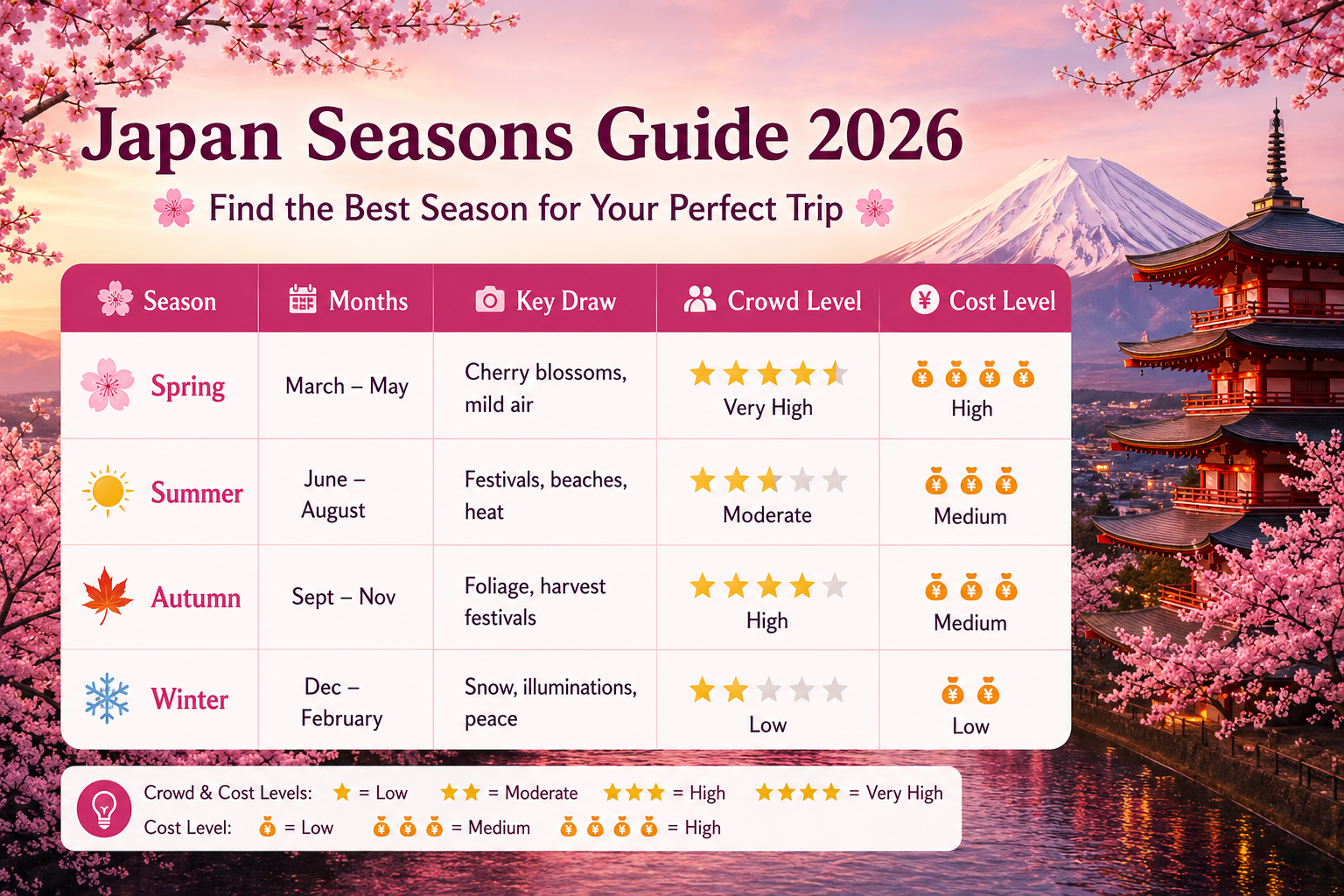
Japan Month-by-Month Guide for 2026: Every Month Explained
🗓️ January - The Underrated Gem
Average Temp: 2°C – 10°C (Tokyo) | 0°C – 5°C (Kyoto) | -7°C – 0°C (Sapporo) Crowds: ⭐⭐ Low (after January 3rd) | Cost: 💰💰 Low
Here is a secret the big tour operators do not advertise: January in Japan is extraordinary, and almost nobody goes.
Once the New Year celebrations wrap up on January 3rd, tourist crowds vanish. Popular temples like Kinkaku-ji (the Golden Pavilion) in Kyoto go from shoulder-to- shoulder to a peaceful, reflective visit. Accommodation prices drop by 30–50% compared to cherry blossom season.
The must-see January moment is Hatsumode - Japan's New Year shrine visit tradition. On January 1st, millions of Japanese people dress in traditional kimono and visit their local shrine to pray for health, prosperity, and love in the new year. Seeing this is a genuinely moving cultural experience.
In Hokkaido, January delivers the finest powder snow on the planet. Niseko ski resort consistently ranks among Asia's top three ski destinations, and the slopes are far less crowded than February.
Vini Grow Insider Tip: Book a traditional ryokan (Japanese inn) in January and experience the full tatami-and-onsen experience for nearly half the spring price. Look for ryokans in Hakone or Kinosaki Onsen - they are magical in winter.
🗓️ February - Lowest Prices, Snow Festivals, Plum Blossoms
Average Temp: 3°C – 10°C (Tokyo) | -3°C – 6°C (Sapporo) Crowds: ⭐⭐ Low | Cost: 💰💰 Low (annual price floor)
February is officially the cheapest time to visit Japan - and also secretly one of the most beautiful. That combination does not happen often in travel.
The undisputed star of February is the Sapporo Snow Festival (Yuki Matsuri). Held in Hokkaido during the first two weeks of February, this UNESCO-recognized festival transforms Odori Park into a glowing open-air museum of enormous ice and snow sculptures. Think: a six-metre-tall Taj Mahal carved from compacted snow. Over 2 million people attend every year, and for good reason.
In Tokyo, Kyoto, and Osaka, ume (plum) blossoms start appearing from mid- February onward. Soft pink and white against bare branches, they are a quieter and more contemplative preview of sakura season - and most tourists completely miss them.
🎌 Fun Fact: February in Japan is also when Setsubun takes place (February 3rd) - a fascinating bean-throwing ceremony where people fling roasted soybeans at someone dressed as a demon while shouting "Oni wa soto! Fuku wa uchi!" (Demons out! Luck in!) You can join this at almost any temple. It is hilarious and completely joyful.
Vini Grow Insider Tip: February departures from Delhi or Mumbai to Tokyo or Osaka consistently offer the best airfare prices of the year. If you want Japan on a budget, this is your month.
🗓️ March - Cherry Blossom Season Awakens 🌸
Average Temp: 8°C – 15°C (Tokyo) | 6°C – 13°C (Kyoto) Crowds: ⭐⭐⭐⭐ High (and rising daily) | Cost: 💰💰💰💰 High
This is the moment Japan has been waiting for all year - and so have you.
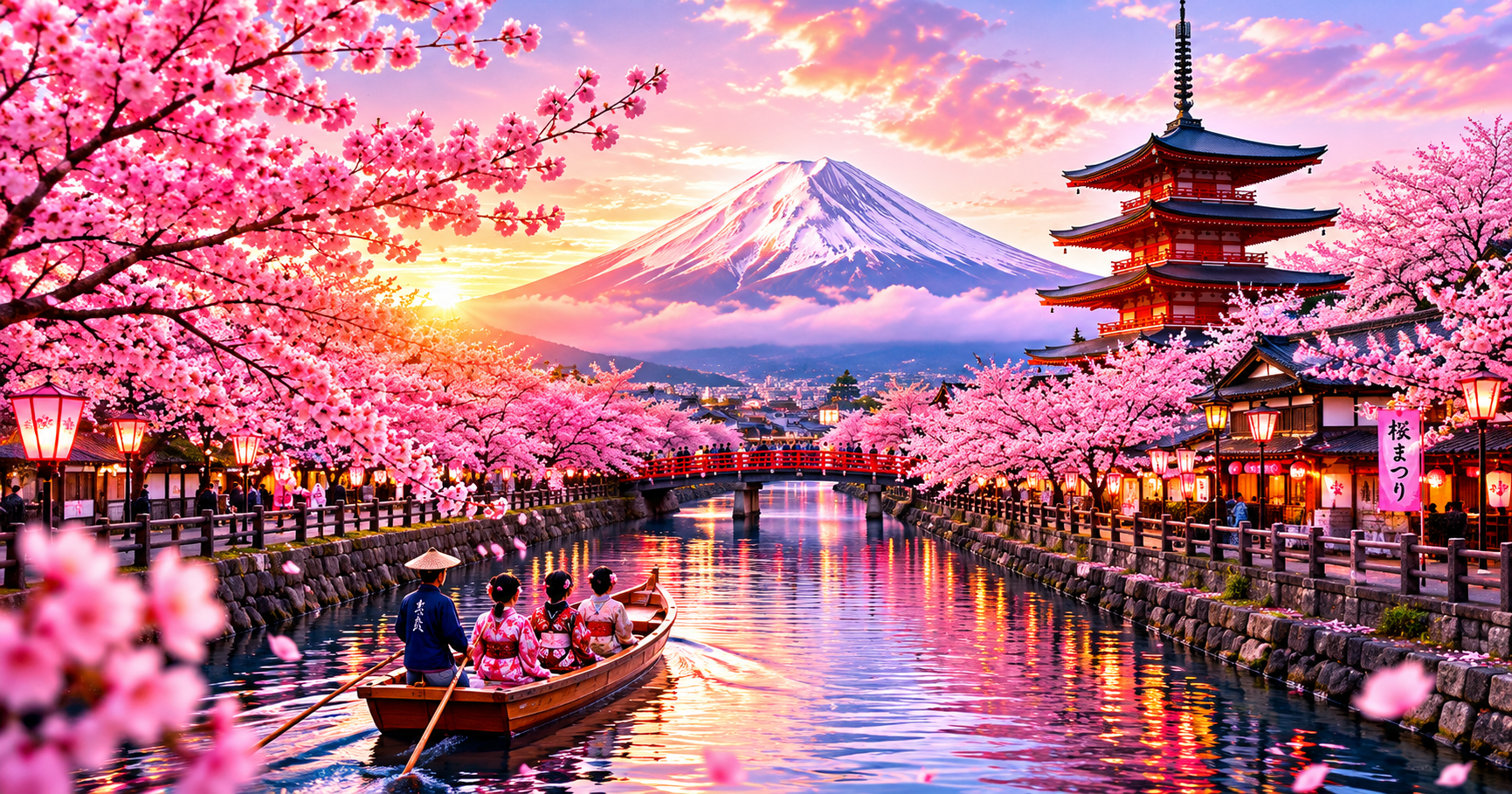
Cherry blossoms (sakura) typically begin blooming in southern Kyushu in early March, reaching Tokyo around March 22–28 and Kyoto around March 25–30. For 2026, the Japan Meteorological Corporation's preliminary data suggests a full bloom window of March 26 – April 4 in Tokyo (book accommodation by November 2025 at the latest - we are serious).
The ancient tradition of hanami - gathering under cherry blossom trees with food, friends, family, and sake, is one of the most beautiful cultural experiences you will ever have. It is not a tourist gimmick. Japanese people genuinely and deeply celebrate this season every single year, having done so for over 1,000 years.
Best hanami spots in March:
- Ueno Park, Tokyo - the most famous, 1,000 trees, festive street food stalls
- Shinjuku Gyoen, Tokyo - quieter, no alcohol, stunning diversity of sakura
- Maruyama Park, Kyoto - anchored by a 200-year-old weeping cherry tree lit up at night
- Himeji Castle - pink moat reflections around a UNESCO World Heritage castle
Vini Grow Insider Tip: Accommodation in Kyoto during peak sakura books out 5–6 months in advance. If you are booking late, look at staying in Nara (30 minutes from Kyoto by train) for 40% lower hotel rates.
🗓️ April - Peak Blossoms + Spring Energy
Average Temp: 12°C – 20°C (Tokyo) | 10°C – 19°C (Kyoto) Crowds: ⭐⭐⭐⭐⭐ Maximum | Cost: 💰💰💰💰 Peak
April is the most popular month to visit Japan - and the most electric.
Early April is full-bloom season across Tokyo and Kyoto, and the entire country feels like a festival. Streets are lined with petals. Convenience stores stock sakura-flavoured everything (yes, even sakura KitKats). Locals and tourists share parks in a rare, genuinely communal atmosphere.
However - there is a critical timing warning:
Golden Week begins April 29th. This cluster of national holidays runs through May 6th and represents Japan's biggest domestic travel rush of the year. If you must travel during Golden Week, book trains and accommodation at least 3 months ahead. If you can avoid it, your trip will be significantly smoother.
Best places to visit in Japan in April:
- Hirosaki Castle, Aomori - arguably Japan's finest castle surrounded by 2,600 cherry trees reflected in a pink moat
- Chidorigafuchi Moat, Tokyo - rowing a boat under a tunnel of cherry blossoms on a lit-up evening is one of Japan's most romantic experiences
- Philosopher's Path, Kyoto - 2km walk along a canal lined with 500 cherry trees
🎌 Fun Fact: Japan has planted approximately 10 million cherry trees across the country. That's one tree for every 12 Japanese people. The national obsession is well-earned.
🗓️ May - Fresh Green Japan (Post-Blossom Bliss)
Average Temp: 17°C – 24°C (Tokyo) | 15°C – 22°C (Kyoto) Crowds: ⭐⭐⭐ Moderate (⭐⭐⭐⭐⭐ during Golden Week May 1–6) Cost: 💰💰💰 Medium (💰💰💰💰 during Golden Week)
After Golden Week ends on May 6th, Japan exhales - and so can you.
Late May offers one of the best travel windows of the entire year. The cherry blossoms have transformed into lush, vivid green foliage - what the Japanese call the "midori" season. Mountain paths and temple gardens look extraordinarily fresh and alive. The weather is warm (not yet humid), and hotel prices drop back to reasonable levels.
This is one of the best times to visit Japan for first-timers - you get excellent weather, beautiful scenery, manageable crowds, and far better value than peak spring.
May Highlight - Aoi Matsuri (Kyoto): Held on May 15th every year, this is one of Kyoto's three major festivals and one of Japan's oldest, dating back over 1,400 years. A procession of 500 people dressed in authentic Heian-period court costumes (7th–10th century style) walks from the Imperial Palace to the Kamo Shrines. It is theatrical, historically rich, and largely overlooked by foreign tourists.
ViniGrow Insider Tip: Visit Ashikaga Flower Park in late April to mid-May for its legendary wisteria tunnels - towering cascades of purple and white flowers that photographers describe as "walking through a dream."
🗓️ June - Rainy Season (The Smart Traveller's Secret)
Average Temp: 20°C – 27°C (Tokyo) | 22°C – 29°C (Osaka) Crowds: ⭐⭐ Low | Cost: 💰💰 Low (second cheapest month)
Most travel guides say "avoid June." We say: June is where smart travellers go.
Japan's rainy season - called tsuyu - runs from early June to mid-July across Honshu and Kyushu. It does not rain all day every day (that is a myth). Rainfall typically happens in the morning or evening, leaving large portions of the day perfectly walkable.
What June actually delivers:
→ 40–50% fewer tourists at Kyoto's most famous temples → Hotel prices near January lows → Hydrangea season - Japan's hidden floral gem
Hydrangeas in June are spectacular. Meigetsu-in Temple in Kamakura transforms into a breathtaking sea of blue and purple hydrangeas, earning it the nickname "The Hydrangea Temple." The photos are extraordinary - and since crowds are low, you can actually take them without 200 people in the background.
The June Exception: Hokkaido
Hokkaido does not experience tsuyu at all. June in Hokkaido means blooming wildflowers, empty hiking trails, and some of the clearest skies in Japan. This is also the beginning of lavender pre-season in Furano.
Vini Grow Insider Tip: Pack a compact travel umbrella (not a bulky one) and a light waterproof layer. Avoid planning strictly outdoor-heavy full-day activities. Shift heavy outdoor days to afternoons.
🗓️ July - Festival Fire and Summer Heat 🎆
Average Temp: 25°C – 33°C (Tokyo) | 27°C – 34°C (Osaka) Crowds: ⭐⭐⭐ Moderate–High | Cost: 💰💰💰 Medium
July is Japan's festival month - and it is genuinely thrilling.
The crown jewel is the Gion Matsuri in Kyoto - one of Japan's three greatest festivals and a UNESCO Intangible Cultural Heritage event. Taking place throughout the entire month, the Grand Procession on July 17th sees enormous ornate festival floats (some weighing 12 tonnes) pulled through Kyoto's ancient streets by teams of white-clad men. It has been celebrated continuously for over 1,100 years.
Japanese summer nights are something entirely unique. Yukata-clad couples walk to riverbank fireworks shows (hanabi taikai). Street stalls line shrine paths selling yakitori, takoyaki, kakigori (shaved ice in dazzling flavours), and cheap cold beer. The energy is warm, festive, and deeply communal.
July also means: The famous Furano lavender fields in Hokkaido hit peak bloom - seas of purple stretching across gentle hills under vast blue skies. This is one of the most photographed landscapes in Asia.
Travel Advisory: July marks the beginning of typhoon season (July–October). Typhoons are tracked and forecast at least 5–7 days in advance. Most pass without major disruption to cities, but getting travel insurance for Japan travel during this window is genuinely recommended.
🗓️ August - Full Summer, Big Festivals, Beat the Heat
Average Temp: 27°C – 35°C (Tokyo) | feels like 38°C+ with humidity Crowds: ⭐⭐⭐⭐⭐ Very High (Obon week) | Cost: 💰💰💰💰 High
August is Japan at its most intensely alive - and its most intensely hot.
The Obon Festival (August 13–16) is Japan's ancestral commemoration period, when families return to their hometowns to honour departed souls. It produces Japan's biggest domestic travel rush (think: every expressway and shinkansen fully booked). If you are visiting in August, book transport and accommodation at least 6–8 weeks ahead.
But the cultural rewards are extraordinary:
→ Awa Odori Festival, Tokushima (August 12–15): Over 1 million people watch and participate in Japan's most energetic traditional dance festival → Gozan no Okuribi, Kyoto (August 16): Five giant bonfires spelling characters are lit on Kyoto's surrounding mountains to guide ancestral spirits home → Nebuta Matsuri, Aomori (August 2–7): Glowing giant lantern floats depicting warriors and mythological figures, paraded through streets at night
For beach lovers: August is ideal for Okinawa - Japan's tropical island chain with turquoise water, coral reefs, and a laid-back culture entirely unlike mainland Japan.
What months not to travel to Japan? For first-time visitors who cannot handle extreme humidity and crowd pressure, August can be overwhelming. But for experienced travellers who want festivals, beaches, and raw cultural energy - it is unmissable.
🗓️ September - Transition Month (Hidden Value)
Average Temp: 22°C – 30°C (Tokyo), cooling noticeably after mid-month Crowds: ⭐⭐ Low–Moderate | Cost: 💰💰💰 Medium–Low
September sits in an interesting position: typhoon risk is highest (especially the first two weeks), but the second half of September can be genuinely lovely - cooler, less humid, and significantly less expensive than summer.
The Moon-Viewing Festival (Tsukimi) happens in mid-September, tied to the harvest moon. Japanese people arrange offerings of rice dumplings and autumn vegetables before a window facing the full moon. It is quiet, poetic, and one of those cultural moments that most tourists completely miss.
First autumn colours begin appearing in Hokkaido and the Japanese Alps from mid-September - weeks ahead of the rest of Japan.
Vini Grow Insider Tip: Book refundable flights and accommodation for September travel. Monitor the Japan Meteorological Agency's typhoon forecasts from 10 days before departure. Most disruptions are manageable with flexible bookings.
🗓️ October - Autumn Begins, Crowds Are Manageable 🍂
Average Temp: 15°C – 22°C (Tokyo) | 13°C – 21°C (Kyoto) Crowds: ⭐⭐⭐ Moderate | Cost: 💰💰💰 Medium
October may be the most underrated month in Japan's travel calendar.
Typhoon season winds down. Summer heat becomes a memory. Crisp, clear blue skies arrive - and with them, the beginning of koyo (autumn foliage) season in the north and mountain regions.
Best autumn foliage spots in October:
- Hokkaido (Daisetsuzan National Park): Full peak colour from early–mid October
- Japanese Alps (Kamikochi): Blazing larches and crimson maples around mirror-flat alpine lakes
- Nikko, Tochigi: UNESCO-listed shrines surrounded by early autumn colour
Jidai Matsuri, Kyoto (October 22nd) - translating to "Festival of the Ages" - features a procession representing 1,200 years of Japanese history through authentic period costumes from each era. You will see samurai armour, Heian court robes, and Edo-period merchants all walking together through Kyoto's streets. It is history made visible.
Vini Grow Insider Tip: This is one of the best times to visit Japan for first timers who want good weather, manageable crowds, spectacular scenery, and reasonable hotel prices - all at once.
🗓️ November - Peak Autumn Foliage Season 🍁
Average Temp: 10°C – 18°C (Tokyo) | 8°C – 17°C (Kyoto) Crowds: ⭐⭐⭐⭐ High | Cost: 💰💰💰💰 High (Japan's second peak season)
November is Japan's hidden peak season - and experienced travellers will argue it rivals or even beats spring in pure visual beauty.
The reason? Koyo in Kyoto. When November hits, the maple trees surrounding temples like Tofuku-ji, Enkoji, and Eikan-do transform into blazing cascades of crimson, orange, and gold. Photographs barely do it justice.
Best places to visit in Japan in November (foliage):
- Tofuku-ji Temple, Kyoto - Japan's single most famous koyo spot; the wooden bridge over a valley of 2,000 maple trees in full red colour is genuinely one of Asia's great visual experiences
- Korankei Valley, Aichi - 4,000 maple trees in a narrow gorge, with evening illuminations that make the leaves glow like fire
- Arashiyama, Kyoto - bamboo grove backed by autumnal mountain slopes, plus the famous Tenryu-ji garden ablaze with colour
- Nikko, Tochigi - UNESCO shrines and gold-leafed pagodas against crimson maples
- Shinjuku Gyoen, Tokyo - Japan's most beautiful urban garden in full autumn colour
Vini Grow Insider Tip: In Kyoto, visit major foliage temples before 9am for empty, photogenic shots. By 10am, they fill quickly. Many temples also run special evening illumination sessions in November (yakan tokubetsu sanpai) - check Kyoto City Tourism for annual dates.
🗓️ December - Winter Illuminations and Inner Peace ✨
Average Temp: 3°C – 12°C (Tokyo) | -1°C – 9°C (Kyoto) Crowds: ⭐⭐ Low–Moderate | Cost: 💰💰 Low–Medium
December in Japan is a study in beautiful contradictions. The country that gave the world the tea ceremony and minimalist design transforms into a city of lights every winter - millions of LEDs draped over parks, rivers, and city streets.
Top winter illuminations in Japan 2026:
- Nabana no Sato, Mie Prefecture: Japan's most spectacular flower park illumination - 8 million LED lights and themed light tunnels; absolutely unmissable
- Rikugien Garden, Tokyo: Tokyo's finest traditional garden lit in blue and white - a 300-year-old landscape garden turned into a dream
- Carillon Park, Nagoya: European-style illuminations with over 4 million lights
Christmas in Japan is a surprisingly delightful cultural quirk. Though Japan is less than 1% Christian, Christmas Eve is the country's biggest romantic date night of the year. Couples exchange gifts, eat Christmas cake (a soft cream and strawberry sponge - a tradition created by a genius Fujiya advertising campaign in 1974!), and the mood across major cities is warm and festive.
New Year's Eve (Omisoka) is the opposite - deeply quiet and spiritual. Temples ring their bells 108 times at midnight (once for each human desire in Buddhist thought) while families eat soba noodles for longevity. It is one of the most moving ways to end a year that travel offers.
Best Season to Visit Japan: Spring vs Autumn - The Honest Verdict
This is the question every Japan-bound traveller eventually asks us. Here is our unfiltered team verdict at Vini Grow Holidays after thousands of client trips:
Choose SPRING (March–April) if you:
- Have cherry blossoms as your absolute #1 goal in Japan
- Are visiting Japan for the first time and want the "quintessential Japan" moment
- Are comfortable with larger crowds and higher prices
- Have booked well in advance (6+ months for accommodation)
Choose AUTUMN (October–November) if you:
- Prefer dramatic, sustained colour over delicate single-week blooms
- Want slightly better restaurant reservations and hotel availability
- Are a photographer or hiker wanting landscapes over flower tunnels
- Have a moderate budget and want peak beauty without absolute peak prices
Our honest verdict: Autumn is better for most travellers. The koyo season lasts 4–6 weeks across Japan, versus sakura's often-fleeting 7–10 days. Autumn is also increasingly overlooked by mass tourism, giving you better access to the actual Japan beneath the surface.
Best Time to Visit Japan for Cherry Blossoms
If cherry blossoms are your primary reason for visiting, here is the precise data you need:
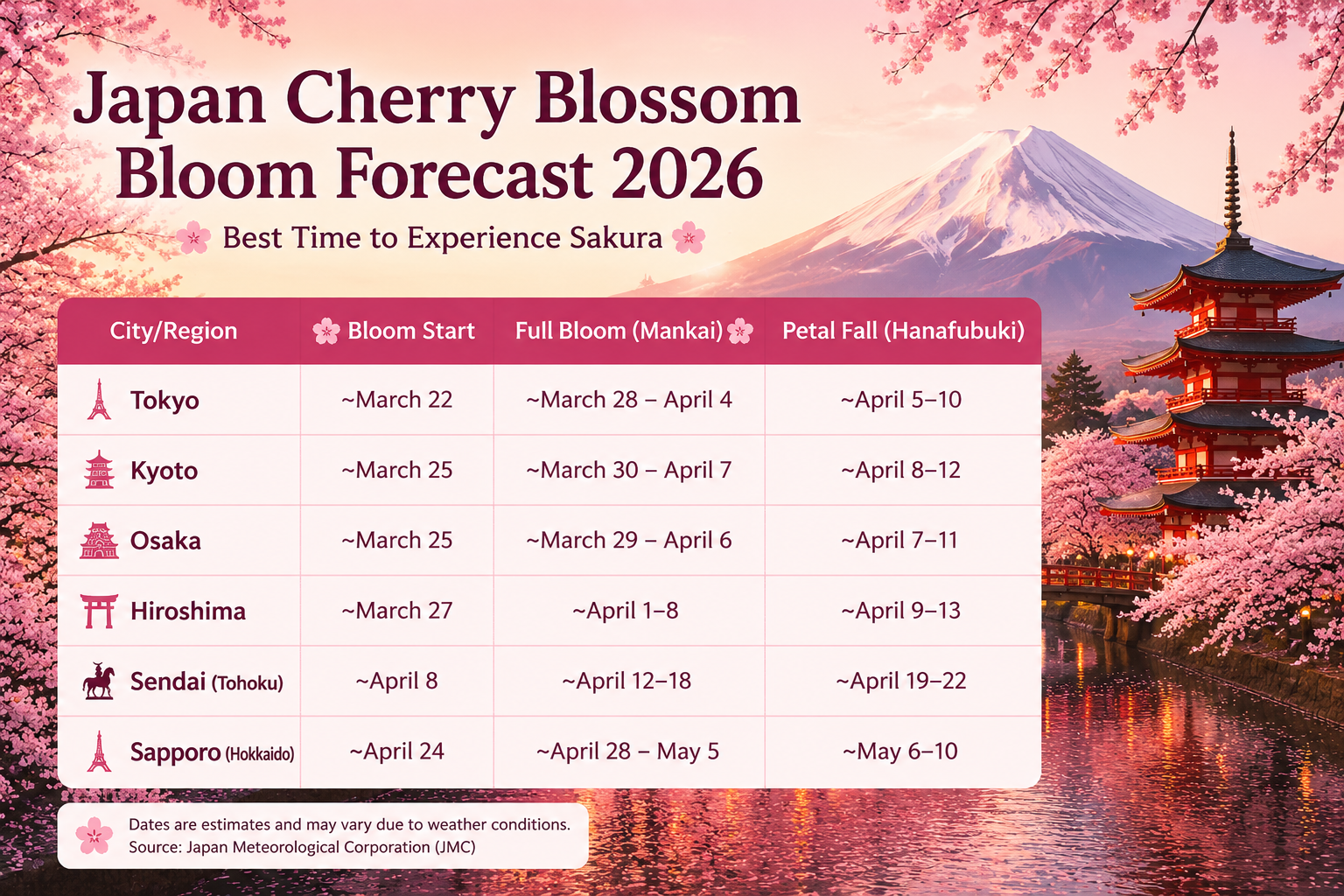
Vini Grow Pro Tip: Do not chase "full bloom" - chase hanafubuki (flower blizzard). The day after peak bloom, petals begin falling like pink snow across every surface. It is arguably more beautiful than the bloom itself, and crowds are noticeably thinner. Plan for 2–3 days after peak bloom at your destination.
Best Time to Visit Hokkaido -Japan's Northern Wild
Hokkaido deserves its own guide (and we have written one - link below). But in brief, here is why Hokkaido does not follow Japan's usual seasonal rules:
❄️ Winter (January–February): World-class powder snow at Niseko, Furano, and Rusutsu ski resorts. Plus the Sapporo Snow Festival (early February). This is arguably Hokkaido's peak season and increasingly popular with Indian skiers.
🌸 Spring (Late April–May): Cherry blossoms arrive 3–5 weeks later than Tokyo - so you can effectively chase sakura from Tokyo (late March) to Hokkaido (late April) for 6 weeks of blossom season.
🌻 Summer (June–August): Furano lavender fields peak in July - rolling hills of purple lavender stretching to the horizon under enormous Hokkaido skies. The drone footage you have seen of Japan's "lavender landscape" is from here.
🍁 Autumn (September–October): Japan's earliest autumn foliage appears in Hokkaido, beginning in Daisetsuzan National Park in mid-September. If you want koyo without November crowds, come to Hokkaido in early October.
Cheapest Time to Visit Japan in 2026
The cheapest months to visit Japan, ranked:
February - Lowest airfares from India. Hotel rates at annual floor.
January (after Jan 3) - Post-New Year lull. Excellent ryokan deals.
June - Rainy season discounts, 40% fewer tourists.
Late September - Post-summer, pre-autumn-peak dip.
What makes Japan expensive: Golden Week (April 29–May 6): Hotel prices can surge 80–120%. Cherry blossom peak (late March–early April): Accommodation in Kyoto and Tokyo books out entirely. Obon Week (mid-August): Domestic travel prices spike.
For Indian travellers specifically: The current INR-to-JPY exchange rate makes Japan significantly more affordable in 2026 than it has been in over a decade. Your rupees stretch further in Japan right now than they have since 2012.
When NOT to Visit Japan: Worst Times Explained
What months not to travel to Japan?
There are two categories of "bad timing" - budget-based and experience-based:
Avoid for budget reasons:
→ Golden Week (April 29–May 6): Every train, hotel, and popular restaurant operates at 100% capacity. Prices are at their annual peak.
→ Cherry blossom peak (late March–early April): Accommodation in Kyoto and Tokyo sells out months in advance. Prices are 2–3x off-season rates.
→ Obon week (mid-August): Domestic travel surge equals booked-solid transport and inflated accommodation rates.
Avoid for weather/experience reasons:
→ July–September: Typhoon risk is real. August feels like walking inside a heated, damp towel in Tokyo (40°C+ with humidity). Not enjoyable for outdoor heavy itineraries.
→ First week of January: New Year crowds at every shrine, temple, and popular tourist site. Transport is chaotic.
What is the least popular time to visit Japan? January and February - which is precisely why savvy travellers choose them. Lower prices, zero queues, and an authentic, un-touristy experience of daily Japanese life. We recommend it enthusiastically.
Will Japan Be More Expensive for Tourists in 2026?
This question is at the top of every client conversation this year. Here is the honest, full answer:
Yes - in some ways:
- Kyoto has introduced entry time slots and crowd limits at Fushimi Inari
- Mount Fuji now charges a ¥2,000 (≈₹1,100) climbing fee and imposes a 4,000 hiker daily cap on the Yoshida Trail
- Popular temples are introducing timed entry windows
- Overtourism surcharges have appeared at a small number of sites
No - in the ways that matter most for Indian travellers:
- The Japanese yen remains at historically weak levels against the Indian rupee
- ₹1 currently buys approximately ₹1.95–₹2.00 in JPY purchasing terms (versus ₹1 = ₹1.20 JPY just 8 years ago)
- Food, convenience stores, local transport, and accommodation are dramatically more affordable for Indian visitors than they were 5 years ago
- A bowl of ramen that feels expensive to a Tokyo local costs Indian visitors roughly ₹250–₹400
The net verdict: Japan in 2026 is more affordable for Indian travellers than at almost any time in recent history, despite the overtourism surcharges. The currency advantage outweighs the new fees significantly.
Fun Japan Travel Facts (Because Japan Deserves More Than Bullet Points)
🎌 The 5-Minute Rule In Japan, arriving 5 minutes early is considered "on time." Arriving exactly on time is considered "slightly late." This cultural relationship with punctuality is why Japanese bullet trains have a recorded average delay of under 60 seconds and why drivers issue public apologies when trains are even 3 minutes delayed.
🎌 The 80/20 Rule - "Hara Hachi Bu" Okinawa, Japan's southernmost island, has one of the world's highest concentrations of centenarians. The locals credit a centuries-old philosophy called hara hachi bu - eating until you are only 80% full. The phrase is said before meals as a mindful reminder. It's a concept that the modern wellness world has been trying to rediscover for decades.
🎌 Can You Wear Red in Japan? Absolutely, yes. Red (aka) in Japanese culture is associated with protection, energy, and good fortune - not bad luck (that association belongs to some other Asian cultures). Red torii gates at Shinto shrines are intentionally coloured to ward off evil. Wear red proudly.
🎌 What NOT to Bring to Japan Check your medication carefully before packing. Common Indian cold and allergy medicines containing pseudoephedrine (found in Actifed, Sudafed, and others) are controlled substances in Japan and illegal to bring without a special import certificate. Also avoid: stimulant inhalers, certain pain medications, and cannabis-derived products. When in doubt, visit the Japan Ministry of Health website before travelling.
🎌 Japan Has 6,852 Islands Most international tourists visit 3–4 at most. The rest - from the subtropical Okinawa archipelago to the volcanic Izu-Oshima - contain entire travel universes waiting to be discovered.
Do visit Tokyo specific guide at : https://vinigrowholidays.com/blog/best-places-to-visit-in-tokyo